Reviewed by Shivam Agarwal, Co-founder — Chai Bon
Short answer: A live chai station suits mehendi and haldi because both are long daytime functions where guests want something warm between rituals. Serve masala or kesar chai in kulhads with bun maska and light snacks, add a cold option for sunny lawns, and keep the counter near the seating. Chai Bon runs these stations across Rajasthan and pan India.
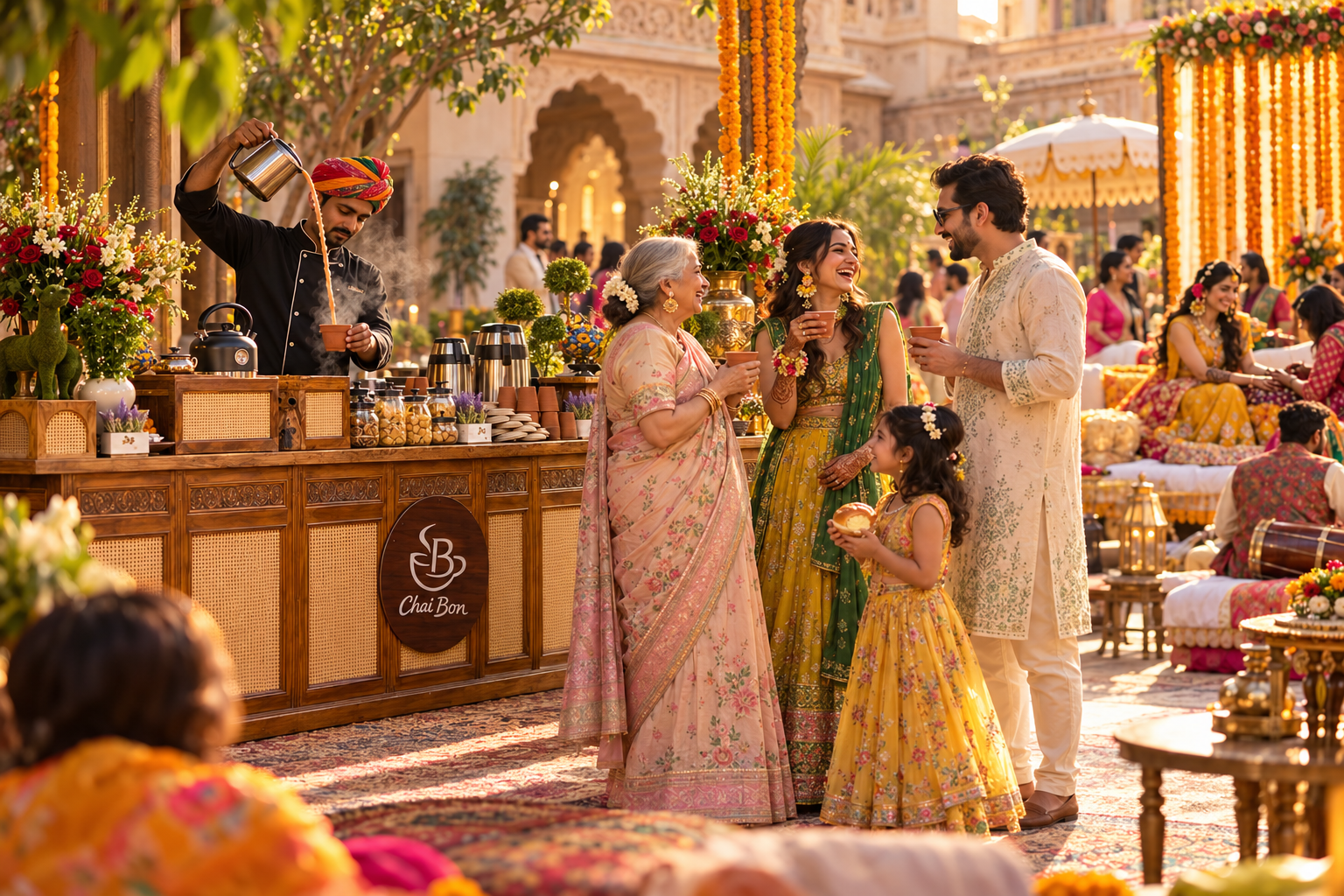
It is a little after four in the afternoon in a walled-city haveli in Jaipur, and the bride has not been able to use her hands since lunch. The mehendi artist is finishing the second arm, the dholak has been going for an hour, and three aunts on the white gaddas are debating whose turn it is to sing next. The light in the courtyard has turned honey-coloured, and the November air has its first edge of cold.
Then the smell of cardamom and crushed ginger drifts in from the corner, and the whole courtyard turns. Cousins line up at the counter, an uncle asks for his tea with less sugar, and someone carries a kulhad over to the bride and holds it while she sips. For the next twenty minutes, that counter is where the two families actually get to know each other.
Day functions run on a different rhythm from the wedding night. Mehendi stretches across an afternoon and haldi starts in the cool of the morning, so what you serve has to suit long hours and busy hands. This guide covers what to serve, where the counter should go, and how a live tea counter fits both functions in the 2026–27 season.
Why does a chai station work so well at a mehendi function?
A mehendi is mostly waiting, in the best sense. The bride sits for three or four hours while the design dries, and guests take turns with the artists, so nobody is ever fully free or fully busy. Heavy plates feel wrong in that setting. A cup of hot tea fits into every gap: between two songs, while one hand dries, during the slow stretch after lunch when energy dips.
Chai also carries the right mood. It is familiar to the grandparents, comforting to guests who travelled in that morning, and easy to hold in one hand while the other stays still. A live chai station, where tea is brewed fresh in front of guests instead of poured from a flask, adds a little theatre too: the boil, the pour, the steam rising off a clay kulhad. That moment shows up in the photographs far more often than a welcome drink in a glass.
What food should you serve at a mehendi function?
Keep it light, handheld and easy to eat without cutlery. Guests are on low seating or getting their own mehendi done, so anything needing a full plate and two hands gets ignored or spilled. The best food ideas for a mehendi function are the snacks you would grab at a good tea stall:
Bun maska and malai toast, which pair naturally with chai.
Pyaaz kachori, especially for a Rajasthani mehendi in Jaipur or Jodhpur.
Bombay or grilled sandwiches, cut into small pieces.
Namkeen and bhujia bowls placed around the seating area.
A live Maggi corner for the younger crowd as the afternoon turns into evening.
If the mehendi runs past sunset, shift the food slightly heavier but keep the tea going. Families planning the full spread can see how a live chai and snacks menu is grouped by station before deciding what to include.
What drinks should you serve at a haldi function?
In most families haldi is a morning function, which in winter means cool air, wet turmeric and guests in light yellow cotton. A hot cup is the first thing people reach for. Kesar chai suits the occasion particularly well: its saffron colour sits right inside a yellow-and-marigold palette, and it feels a touch more festive than everyday masala chai.
The kulhad helps in a practical way too. Turmeric stains almost everything it touches, and a clay cup is used once and set aside, so there are no yellow-streaked mugs to scrub afterwards. For a haldi on a sunny lawn in Goa, Mumbai or Bangalore, where mornings warm up fast, add a cold option alongside, such as cold coffee, cold brew or a cucumber-mint infusion. The best haldi drinks cover both ends: something warm for the early arrivals and something cool for when the dancing starts.
Where should the chai counter go at a mehendi or haldi venue?
Placement decides whether a counter gets used or ignored:
Within sight of the seating, outside the haldi splash zone. Turmeric paste travels further than you expect once the cousins get involved.
In the shade. Afternoon sun on a Rajasthan lawn is strong even in December, and a counter in full glare empties out.
Away from the mehendi artists. Nobody should carry a full cup past freshly applied designs.
With room for a short queue. The crowd arrives in waves after each ritual.
Every city brings its own layout. In Jaipur it is usually a haveli courtyard or an Ajmer Road farmhouse lawn; in Udaipur, lakeside lawns and palace terraces; in Delhi NCR, the farmhouses of Chhatarpur and Gurugram; in Mumbai, bungalow gardens in Juhu or Madh Island; in Goa, villa lawns in Assagao and Candolim; and in Pushkar or Jodhpur, desert camps and heritage hotel courtyards. For out-of-town functions, read how a destination wedding chai station is planned around travel and setup time.
How much does a chai station for a mehendi or haldi function cost?
There is no single price; cost moves with a handful of factors: the guest count, the number of hours the counter runs, how many functions it covers, whether you want tea only or tea with snacks, any personalisation on cups or signage, and how far the venue is from the nearest base. A three-hour mehendi for 150 guests and a full haldi-to-sangeet day for 400 are completely different bookings.
As a planning heuristic, guests at a long mehendi often come back for a second cup, so plan for roughly two servings per guest over three to four hours, and fewer for a short morning haldi. If your dates and headcount are fixed, share them on WhatsApp for a custom quote and get a plan built around your functions.
Can one chai station cover haldi, mehendi and the sangeet?
Yes, and for many families it is the simplest way to plan. The counter stays in one place and the menu shifts with the day:
Morning haldi: kesar and masala chai with bun maska, plus a cold infusion if the sun is out.
Afternoon mehendi: masala chai, kachori and small sandwiches, refilled through the slow hours.
Evening sangeet: coffee and chai alongside a live Maggi corner as the dance floor fills.
The late-night version of this has become a trend of its own, covered in our guide to the midnight chai and Maggi counter. And if your functions fall between November and February, our note on winter weddings in Rajasthan covers cold-morning timing and menus in more depth.
Why do families book Chai Bon for mehendi and haldi functions?
Chai Bon runs premium live kulhad chai stations for weddings and events, where every cup is brewed fresh at the counter and served in clay. The menu is built as stations rather than a single urn: Chai-e-Khaas for house masala and royal kesar chai, the Coffee Durbar and Cold Brew Bar for coffee drinkers, an Infusion Station for cucumber-mint coolers, and snacks such as bun maska, pyaaz kachori and live Maggi. Custom sodas can be added for warmer afternoons.
For day functions, that range is the point. The same counter can warm up a cold haldi morning in Udaipur, keep a long mehendi in Jaipur going, and hand over to the sangeet crowd by evening. The team works across Rajasthan and pan India, and families planning several events can browse chai stations for wedding functions by occasion before shortlisting a menu.
Frequently Asked Questions
Is a chai station a good idea for a mehendi function in Jaipur?
Yes. Jaipur mehendis usually run through a long afternoon in a haveli courtyard or farmhouse lawn, and from November the evenings turn cool, so hot kulhad chai with kachori or bun maska fits the setting well. Place the counter in the shade near the seating.
What drinks work best for a haldi ceremony in Udaipur or Goa?
In Udaipur's winter mornings, hot kesar or masala chai is the first choice. In Goa, where haldi mornings warm up quickly, pair hot chai with a cold option such as cold coffee or a cucumber-mint infusion so guests have both.
Can a live chai counter be set up at a farmhouse mehendi in Delhi NCR?
Yes. Farmhouses in Chhatarpur and Gurugram usually have enough lawn space for a counter. Share the venue layout in advance so the team can confirm space, power and water access and pick a shaded spot near the seating.
How many cups of chai should we plan per guest at a mehendi?
As a planning heuristic, plan about two servings per guest for a three-to-four-hour mehendi, since many guests return for a second cup. A short morning haldi usually needs fewer. The final count depends on weather, timing and how many other drinks are on offer.
How does the bride drink chai with mehendi on her hands?
Usually a cousin or friend holds the kulhad while she sips. Ask the counter to serve her cup slightly cooled, and keep it well away from the fresh design until the mehendi has dried.
Can the same chai station serve haldi, mehendi and sangeet?
Yes. One counter can stay in place across the day while the menu changes: kesar chai and bun maska at the morning haldi, masala chai and snacks at the mehendi, and coffee with live Maggi at the sangeet.
How early should we book a chai station for the 2026–27 wedding season?
Book as soon as your function dates are fixed. The busiest muhurat dates between November and February fill up first, and early booking leaves time to plan menus, personalisation and travel for destination functions.
Plan your wedding chai with Chai Bon. Share your dates, functions and guest count on WhatsApp or via chaibon.com and the team will plan the counter, menu and timing for you.